Cuisine guideUpdated
Master Thai Cuisine: Bold Flavours at Home
Learn to cook authentic Thai cuisine at home with essential ingredients, techniques, and recipes. Discover bold flavours and simple tips to impress.
What Makes Thai Cuisine Special
Thai cuisine is celebrated worldwide for its harmonious balance of four fundamental flavours: sweet, sour, salty, and spicy. This philosophy extends beyond taste into the cultural and spiritual traditions of Thailand, where meals are an expression of balance and respect for natural ingredients. Whether you're exploring street food or royal court dishes, Thai cooking demonstrates an intuitive understanding of how flavours complement and elevate one another.
The technique-driven nature of Thai cooking sets it apart from many other cuisines. Stir-frying over high heat, quick blanching, and precise knife work are hallmarks of the tradition. Thai cooks often cook with their senses—adjusting seasoning by taste and aroma rather than strict measurements—which means home cooks can develop confidence by understanding the principles behind each dish rather than rigidly following recipes.
Cultural context is woven through every meal. Thai food reflects centuries of trade, geography, and Buddhist philosophy. Coconut milk, lime juice, and chilli appear across regions, yet each area—from the spicy northeast (Isaan) to the milder central plains—brings its own character. When you cook Thai food, you're participating in a living culinary tradition that values freshness, community, and the joy of sharing meals.
Got a Thai recipe in a different language or using cups instead of grams?
KitchenConvert converts any recipe — units, servings, and language — in seconds. Free to try.
Try it free →Essential Ingredients
- Thai fish sauce (nam pla) – Pungent fermented anchovy liquid; the backbone of savoury depth
- Coconut milk – Rich, creamy base for curries and soups; use full-fat varieties for best flavour
- Lime juice – Bright acidity that balances heat and richness
- Thai chillies – Small, fiery peppers; adjust quantity to your heat tolerance
- Garlic and shallots – Aromatic foundations for almost every Thai dish
- Lemongrass – Citrusy, floral notes that define Thai aromatics
- Galangal – Peppery ginger relative; essential in curries and soups
- Thai basil – Anise-like herb with a distinctive peppery finish
- Palm sugar – Subtle sweetness that's less cloying than refined sugar
- Tamarind paste – Tangy-sour element in many classic dishes
Tips for Success
First, taste as you cook. Thai seasoning is intuitive and personal; start conservatively with fish sauce and chillies, then adjust. This builds your palate and confidence in the kitchen.
Second, prepare mise en place before you begin cooking. Thai cooking happens quickly once heat is applied, so having ingredients measured and prepped prevents scrambling and ensures even flavour development.
Third, source fresh herbs and aromatics. The vibrancy of Thai dishes depends on fresh basil, coriander, and lime. Frozen or dried substitutes diminish the authenticity and brightness of the final dish.
Finally, master your heat source. A strong flame or high-powered burner is crucial for achieving the characteristic sear and wok hei (breath of the wok) in stir-fries. If your home cooker is modest, work in smaller batches and don't overcrowd the pan.
Featured Recipes
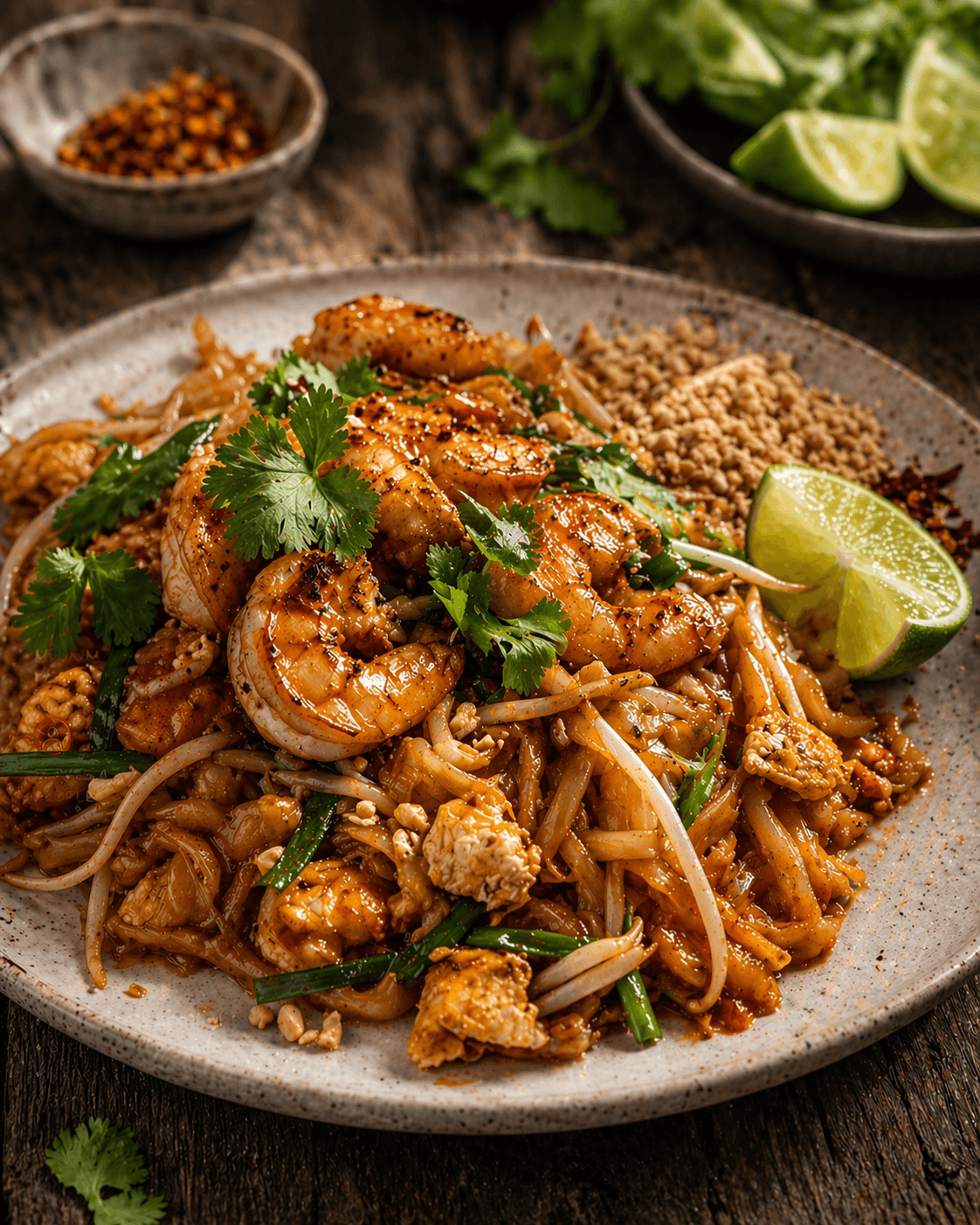
No introduction to Thai cooking is complete without Pad Thai, Thailand's most iconic noodle dish. This stir-fried rice noodle classic balances tangy tamarind, umami from fish sauce, and a hint of sweetness with a protein of your choice. It's an excellent first Thai recipe because it teaches fundamental techniques and flavour balancing in under 20 minutes. Try our Pad Thai recipe to serve two people with authentic results.
Once you've mastered the basics, explore how regional variations celebrate different ingredient combinations. Each dish is an opportunity to refine your understanding of Thai flavour principles and develop your own cooking intuition. The beauty of Thai cuisine lies in its accessibility—with quality ingredients and a little practice, you'll create restaurant-quality meals in your own kitchen.
Community recipes
Thai cuisine recipes from our community
Questions
Frequently asked questions
Can I make Thai food without fish sauce?
What's the difference between Thai basil and regular basil?
How do I balance spice in Thai cooking?
Is Thai cuisine gluten-free?
Explore more cuisines
Found a Thai cuisine recipe you want to cook?
Paste the URL or photo — KitchenConvert converts the units, scales the servings, and tells you what to substitute if you're missing an ingredient.
Convert this recipe free →