Cuisine guideUpdated
British Cuisine: Comfort Food Mastery Simplified
Master authentic British cuisine with expert tips, essential ingredients, and traditional recipes. Transform your cooking today at KitchenConvert.io.
What Makes British Cuisine Special
British cuisine celebrates simplicity, quality ingredients, and time-honoured cooking techniques that have shaped food culture for centuries. Far from the outdated stereotypes, modern British cooking balances hearty, warming flavours with refined techniques and seasonal awareness. The flavour profile emphasises the natural taste of ingredients rather than masking them with heavy sauces—think tender roasted meats, perfectly seasoned vegetables, and rich, savoury gravies that complement rather than overwhelm.
What truly sets British cuisine apart is its cultural significance. Meals like Sunday roasts bring families together, while traditional dishes tell stories of regional pride and heritage. British cooking draws on centuries of agricultural tradition, from Yorkshire puddings to Cornish pasties, each dish rooted in local ingredients and practical necessity. The technique of slow-roasting, braising, and careful seasoning creates depth of flavour that develops over time—a philosophy that rewards patience and attention.
Seasonal awareness runs through British cooking like a thread. Spring brings tender lamb and fresh vegetables, summer offers light salads and grilled fish, autumn delivers game and root vegetables, and winter calls for hearty stews and roasted comfort. This respect for seasons ensures your meals always taste their best.
Got a british recipe in a different language or using cups instead of grams?
KitchenConvert converts any recipe — units, servings, and language — in seconds. Free to try.
Try it free →Essential Ingredients
- Beef stock – The foundation for gravies, sauces, and traditional Sunday roasts
- Fresh herbs (thyme, rosemary, parsley) – Essential for layering subtle, aromatic flavours
- Root vegetables (carrots, parsnips, potatoes) – Nutritious sides that caramelise beautifully when roasted
- Quality butter – For Yorkshire puddings, sauces, and finishing dishes with richness
- Worcestershire sauce – A savoury umami booster that deepens savoury dishes
- Mustard (wholegrain or English) – Adds tang and complexity to meats and sauces
- Sea salt and pepper – British cooks season generously and taste constantly
- Onions and garlic – The aromatic base for stocks, gravies, and slow-cooked dishes
Tips for Success
Master the roasting technique: British cooking hinges on perfect roasting. Always bring meat to room temperature before cooking, season generously, and don't rush. A slow, steady heat creates a golden crust while keeping the interior tender.
Invest in good stock: Most traditional British sauces and gravies start with homemade or quality shop-bought stock. This foundation transforms simple pan drippings into restaurant-quality gravies.
Respect resting time: After roasting, let meat rest for at least 10 minutes. This allows juices to redistribute, ensuring every bite is tender and moist—a non-negotiable step for British cooking excellence.
Build layers of flavour: British cuisine isn't about single bold flavours; it's about harmonious depth. Toast your herbs in fat, brown your vegetables properly, and deglaze pans to capture every bit of savoury goodness.
Season at every stage: Rather than seasoning once at the end, taste and adjust throughout cooking. This approach allows flavours to develop and meld beautifully.
Featured Recipes
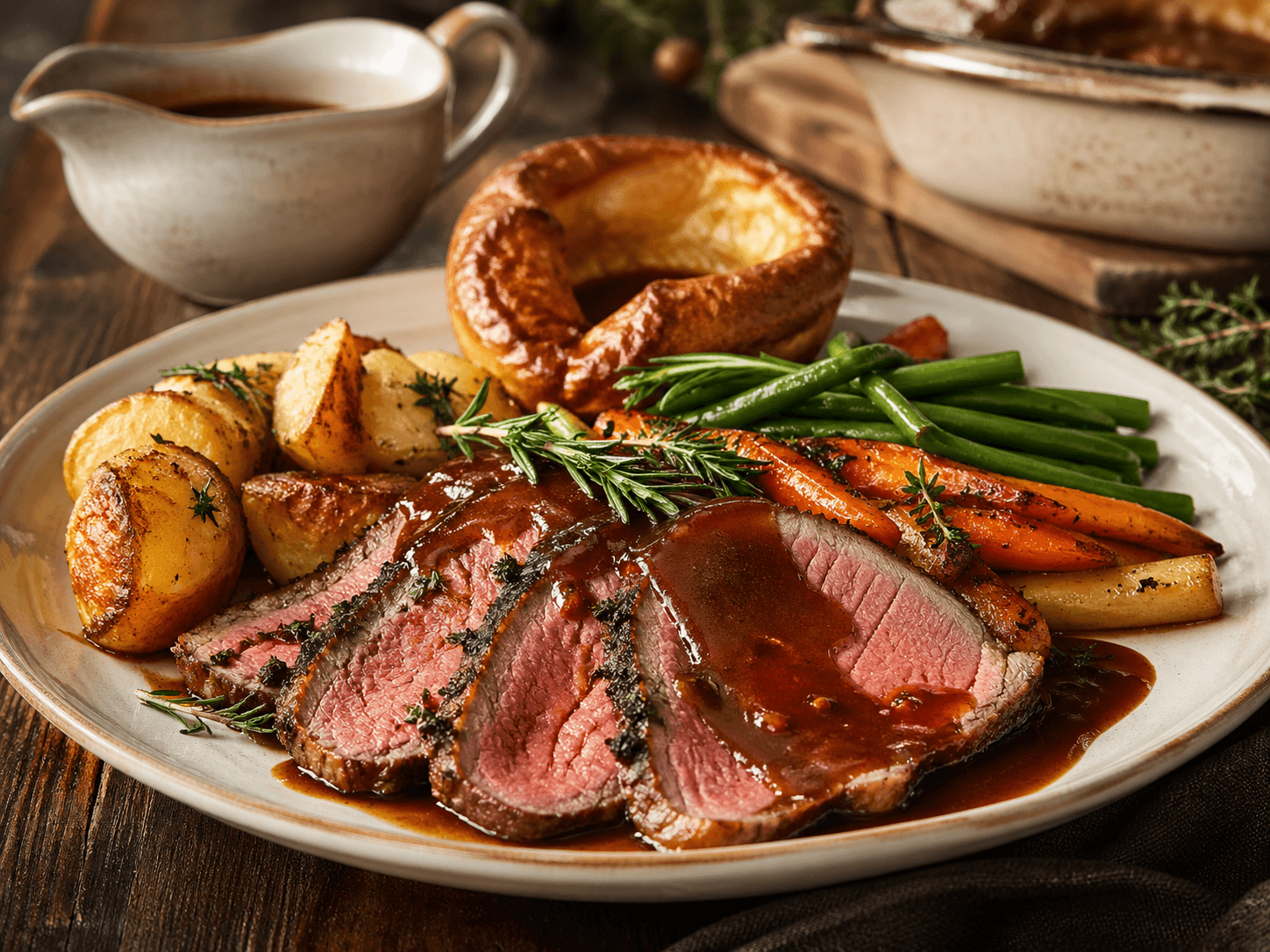
The heart of British cooking beats strongest in the Classic Roast Beef Recipe, a dish that epitomises everything this cuisine celebrates. This timeless centrepiece serves four and demonstrates the elegant simplicity British cooks cherish—quality beef, aromatic vegetables, and precise technique combine to create a meal that feels both effortless and impressive. Learning to roast beef properly unlocks understanding of countless other British dishes, from Yorkshire puddings to traditional gravy-making.
Whether you're hosting a formal Sunday dinner or cooking for your nearest and dearest, mastering these recipes will elevate your culinary confidence and deepen your appreciation for British food traditions.
Community recipes
british cuisine recipes from our community
Questions
Frequently asked questions
What is a typical British Sunday roast?
Why is resting meat important in British cooking?
What's the difference between British and American gravy?
Can I make British dishes without traditional ingredients?
Explore more cuisines
Found a british cuisine recipe you want to cook?
Paste the URL or photo — KitchenConvert converts the units, scales the servings, and tells you what to substitute if you're missing an ingredient.
Convert this recipe free →