Cuisine guideUpdated
Spanish Cuisine: Bold Flavours & Time-Honoured Traditions
Master authentic Spanish cooking with essential ingredients, techniques & tips. Discover vibrant flavours that bring Spain to your kitchen. Explore now.
What Makes Spanish Cuisine Special
Spanish cuisine is a celebration of simplicity, quality ingredients, and bold, unforgettable flavours. Rooted in centuries of cultural exchange—from Moorish influences to Mediterranean traditions—Spanish cooking prioritises the natural taste of each ingredient rather than masking it with heavy sauces. The cuisine reflects Spain's diverse geography: coastal regions favour seafood and olive oil, while inland areas embrace hearty legumes, cured meats, and robust stews. What ties it all together is a philosophy of slow cooking, communal dining, and letting time and heat do the work.
The foundation of Spanish cooking rests on three pillars: olive oil, garlic, and tomatoes. These humble ingredients form the base for countless dishes, enhanced by the warmth of paprika, the earthiness of saffron, and the brightness of fresh herbs. Spanish cooks understand that great flavour comes from patience—simmering stocks for hours, allowing spices to bloom in hot oil, and letting dishes meld overnight. This approach rewards home cooks who embrace the rhythm of traditional Spanish kitchens.
Beyond ingredients, Spanish cuisine is defined by its techniques. Pan-frying in generous amounts of olive oil, slow-simmering in clay pots, and cooking over open flames are methods that have shaped Spanish food for generations. Whether preparing a quick tapa or a festive paella, Spanish cooks apply the same principle: respect the ingredient, respect the process, and gather to share the result.
Got a Spanish recipe in a different language or using cups instead of grams?
KitchenConvert converts any recipe — units, servings, and language — in seconds. Free to try.
Try it free →Essential Ingredients
- Extra virgin olive oil – The backbone of Spanish cooking; use generously for flavour and depth
- Saffron – Expensive but essential; brings colour and subtle floral notes to rice dishes
- Smoked paprika (pimentón) – Sweet or hot varieties add a distinctive Spanish character
- Garlic – Used liberally, often fried gently to infuse oil with flavour
- Tomatoes – Fresh or tinned; the base for soffritos and countless sauces
- Short-grain rice (bomba or Arborio) – Absorbs liquid without becoming mushy in paella
- Chorizo – Cured sausage that adds smoky, spiced depth to stews and rice dishes
- Onions – Sweet varieties preferred for building flavour bases
- Fresh herbs – Parsley and bay leaves for brightness and aroma
Tips for Success
- Toast your spices: Bloom paprika and saffron briefly in hot oil before adding other ingredients. This releases their essential oils and deepens their flavour.
- Don't rush the sofrito: The aromatic base of garlic, onion, and tomato should be cooked slowly over medium heat for 10–15 minutes until soft and fragrant.
- Use proper rice: Bomba or Arborio rice is essential for paella; short-grain varieties won't turn mushy and absorb stock perfectly.
- Taste as you go: Spanish cuisine relies on balancing salt, acid, and richness. Adjust seasoning throughout cooking, not just at the end.
- Embrace communal spirit: Spanish meals are about gathering, sharing, and lingering at the table. Cook with confidence and enjoy the process.
Featured Recipes
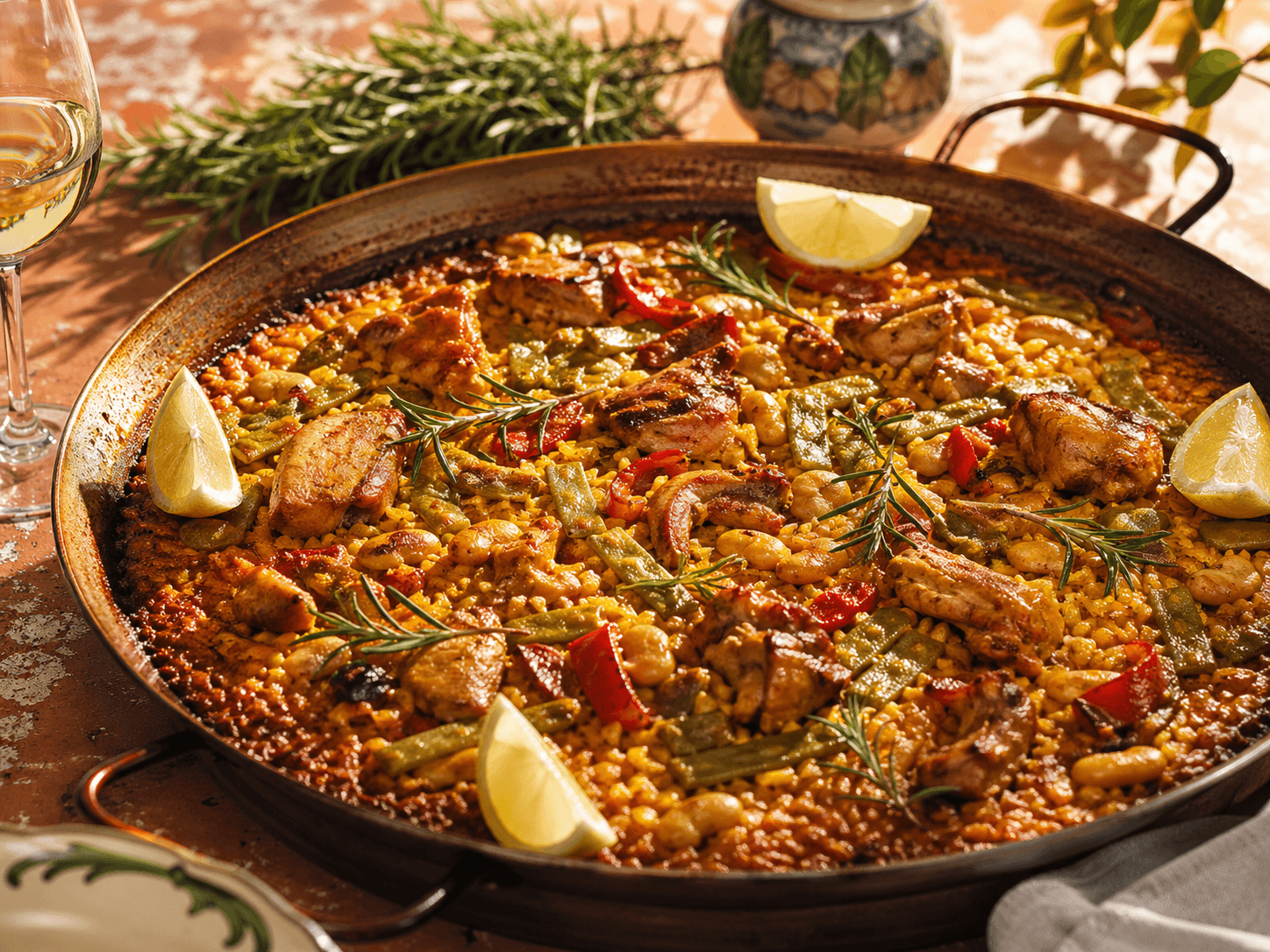
At the heart of Spanish culinary tradition sits Paella Valenciana, a showstopping dish that transforms simple ingredients into something truly magical. Originating from the Valencia region, this one-pan wonder features saffron-infused rice studded with seafood, vegetables, and aromatics—all cooked together until the rice develops a slightly crispy base called socarrat. Paella Valenciana is perfect for entertaining, as it serves four generously and allows you to showcase the vibrant colours and complex layering of Spanish flavours. Whether you're cooking for a special occasion or simply craving an authentic taste of Spain, this recipe delivers restaurant-quality results at home.
Mastering paella teaches you fundamental Spanish cooking principles: the importance of quality stock, the skill of managing heat to achieve that prized crispy bottom, and the joy of feeding people with food cooked with care. Once you've conquered Paella Valenciana, you'll find yourself reaching for the same techniques and ingredients in countless other Spanish dishes. Start here, and let Spain's culinary traditions transform your kitchen.
Community recipes
Spanish cuisine recipes from our community
Questions
Frequently asked questions
What's the difference between Spanish and Italian cooking?
Can I make paella without saffron?
Is Spanish food very spicy?
What equipment do I need to cook Spanish food at home?
Explore more cuisines
Found a Spanish cuisine recipe you want to cook?
Paste the URL or photo — KitchenConvert converts the units, scales the servings, and tells you what to substitute if you're missing an ingredient.
Convert this recipe free →